
Asgardian Field Notes
The Paint of Light: Philips Hue Gradient Lightstrip 80 Inch Review
Most light strips glow one color at a time. The Philips Hue Gradient Lightstrip, in the 80-inch length, does what its name says: it blends multiple colors along a single run, so the back of a screen or the line of a wall becomes a gradient instead of a stripe. It needs the Hue Bridge to think, and a Sync Box to follow the screen, and once those are in place it paints the room's edge in real time.
Paint, Not Stripes
The gradient is the whole difference. A normal strip is one color along its length, which is why most strips look like decoration. The Gradient Lightstrip renders a smooth blend: deep blue at the top of the screen, warm white at the sides, and whatever the scene asks for between. The light behaves like paint, drawing the wall in gradients that shift with the content or the mood.
The 80-inch run covers a large screen or a long architectural line. Cut it to fit, bend it around the corner, mount it behind the television or along a shelf. The flexibility is the point: the strip is a material, and the room is the canvas.
The Bridge and the Sync Box
This is where the strip joins the Bifrost properly. The Hue Bridge is the keystone: it runs the Zigbee mesh, keeps the routines local, and refuses to depend on your WiFi's mood. The Sync Box is the second brick, the piece that watches the screen and drives the strip in real time, so a sunset in the film becomes a sunset on the wall behind it.
Both are required, and the honest note belongs here: the Gradient Lightstrip is not a plug-and-play bulb. It is a piece of the lighting architecture, and it asks for the architecture to exist first. That is a feature for the house that has it, and a cost for the house that does not.
One Language Across the House
Through the Bridge, the strip answers Alexa, HomeKit, and Google in the same language as every other Hue light in the house. The television gradient joins the same scenes as the lamps and the ceiling lights, so the room does not have to choose between the screen and the sanctuary. When the film ends, the strip becomes part of the evening scene, lowering with the rest of the house.
Routines live in the Bridge, not in a cloud subscription, so the strip behaves the same at 2 AM as it does at 8 PM, internet or no internet.
The Honest Limitations
The strip is a component, not a kit. The Bridge and the Sync Box are separate purchases, and the full experience costs more than the strip alone. Second, the gradient is most convincing when it is mounted behind a screen or along a clean architectural line; on a cluttered shelf it competes instead of completing. Spend the setup time, and it earns it.
Who Should Buy It
Buy the Gradient Lightstrip if the house already runs on the Hue Bridge and the room wants light that moves. Buy it for the cinema wall or the line of the stairs. Skip it if you want a single smart strip without the architecture, because the gradient is the point, and the architecture is the price of the point.
Frequently Asked Questions
Does the Hue Gradient Lightstrip work without a Bridge?
No. The Bridge is required, and the Sync Box is required for the screen-sync effect. The strip is part of the Hue architecture, not a standalone light.
What length is the 80-inch Gradient Lightstrip?
It runs 80 inches along the surface, sized for a large television or a long architectural line, and it can be trimmed and routed to fit the space.
Does the strip sync with the TV?
Yes, through the Hue Sync Box, which watches the screen and drives the strip in real time so the light follows the content.
Which assistants work with it?
Alexa, HomeKit, and Google all understand the strip through the Bridge, and it joins the same scenes and routines as the rest of the Hue house.
The Philips Hue Gradient Lightstrip 80 Inch lives in the Bifrost realm of the Asgard@Home vault. Check the current price through the tracked link. If you buy through it, we may earn a commission at no extra cost to you.
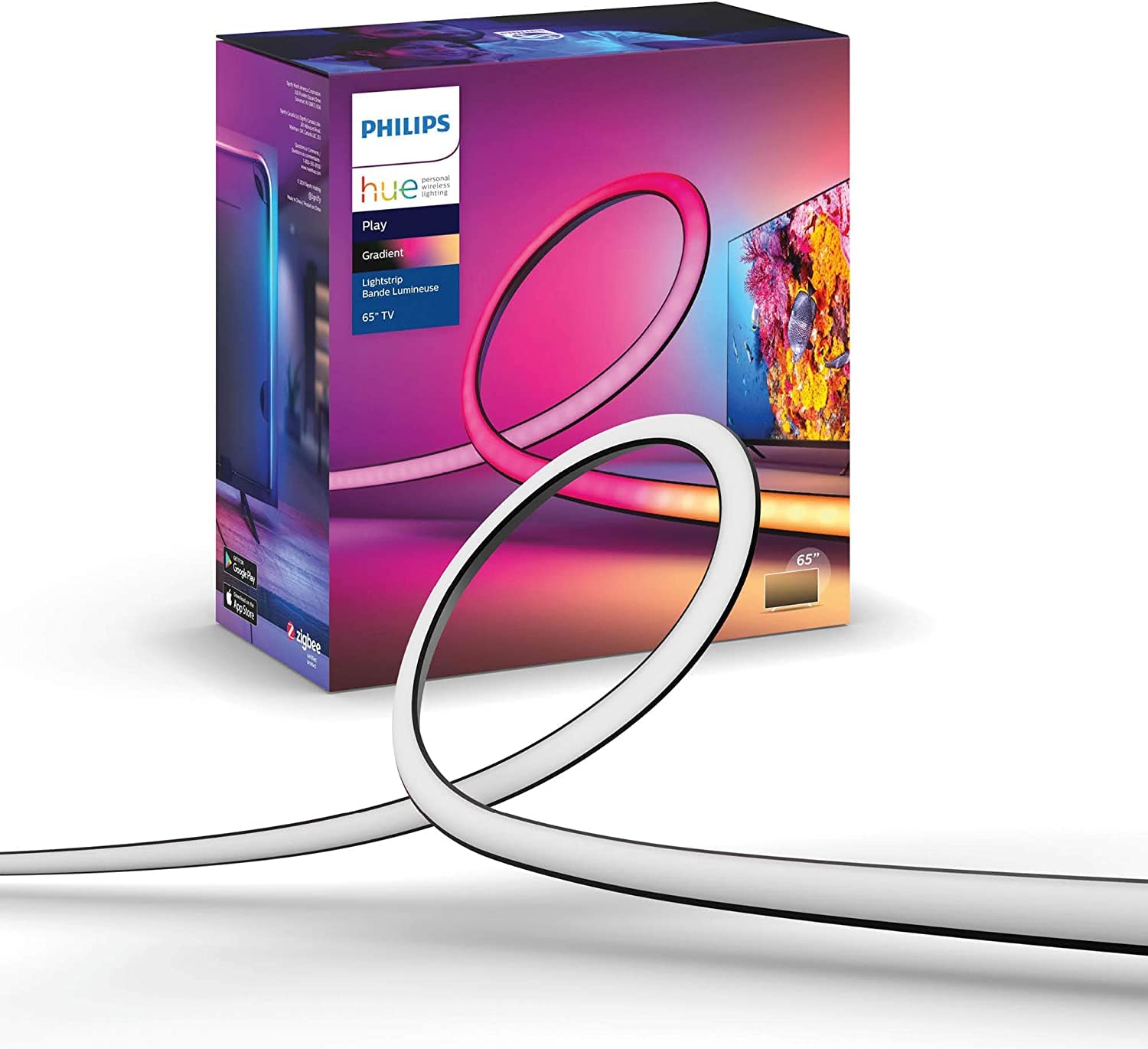
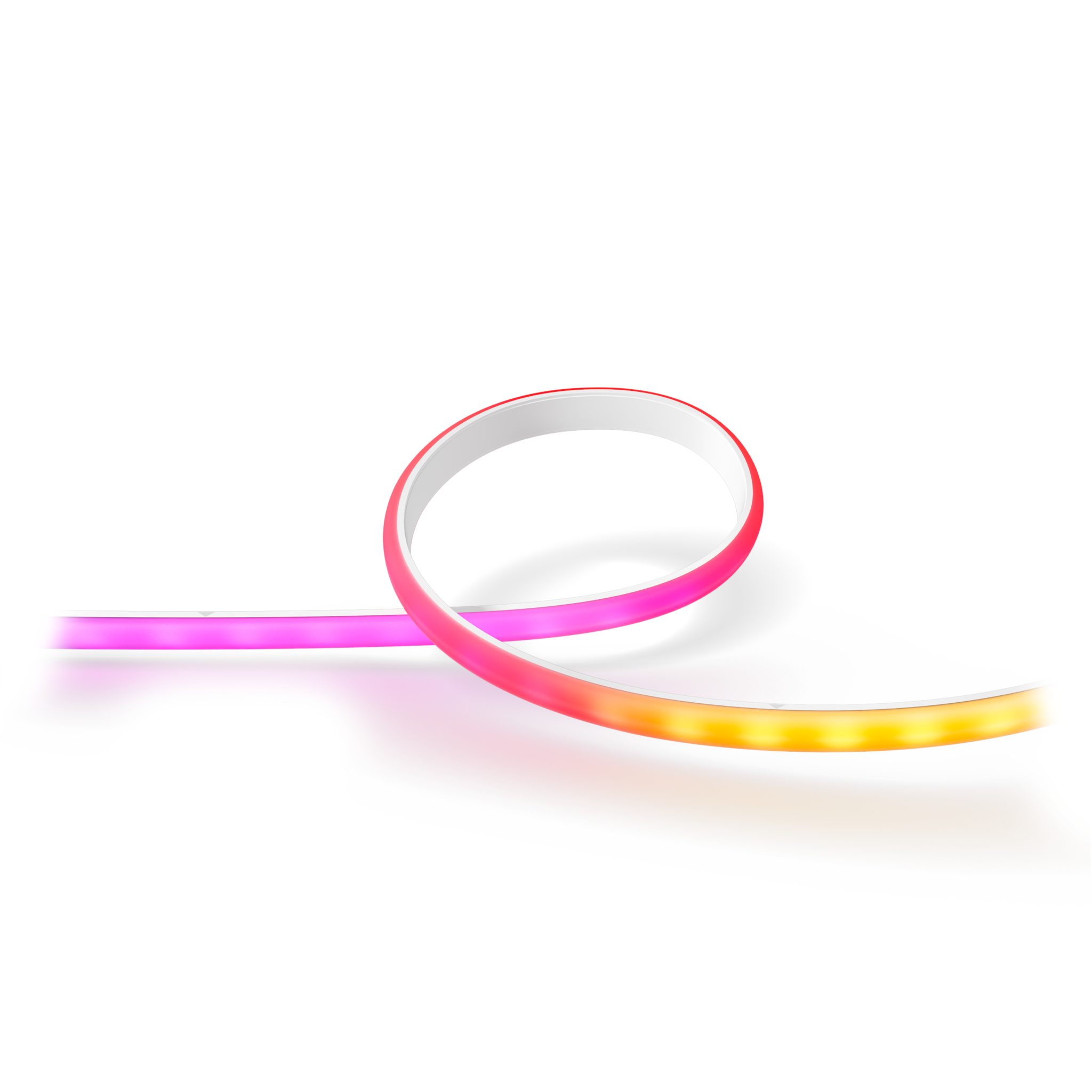
Central Artifact of this Saga
Philips Hue Gradient Lightstrip 80 Inch - The Paint of Light
Crafted by Philips Hue • $$
Most light strips glow one color at a time. The Hue Gradient Lightstrip, in the 80-inch length, does what its name says: it blends multiple colors along a single run, so the back of a screen or the line of a wall becomes a gradient instead of a stripe. It needs the Hue Bridge to think, and a Sync Box to follow the screen, and once those are in place it paints the room's edge in real time. Alexa, HomeKit, and Google all understand it through the Bridge. This is light as infrastructure with a paintbrush attached.